


Design fiction is a working method that explores the potential consequences of emerging technologies in our near future, presented through realistic and immersive scenarios tailored to the chosen theme.
For this project, I created a fictional company from scratch: Bondly, a brand specializing in smart glasses. These glasses allow users to see, in real time, the social profiles of people they pass on the street—and even interact with them.
Bondly promises to bring people closer. Technically, it does—but not always in the way you’d expect.

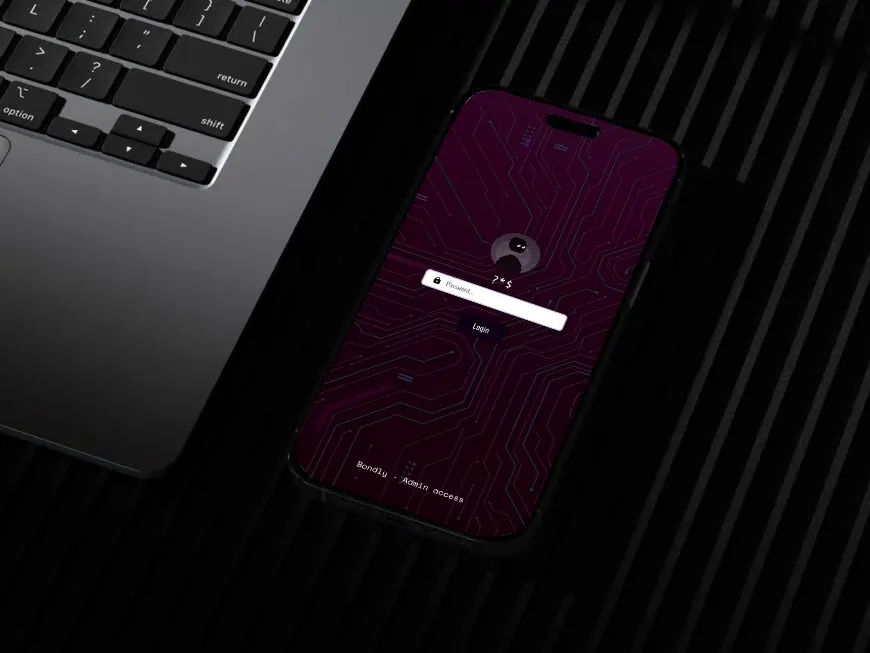
To question this technology, I chose to lean into the narrative side of the experience. Instead of landing on a typical product page, the user is thrown into a world where something clearly isn’t right.
At first, they’re met with a login screen that appears reserved for an administrator. To move forward, they must guess the password. The good news? Everything seems designed to help them succeed. As if someone wants them to access the system...
Once logged in, they find a task list waiting for them. Gradually, the user realizes they’ve stepped into the shoes of an employee tasked with monitoring Bondly’s users. Every action, every suspicious behavior, every movement is being tracked.
Privacy seems to have become an illusion for Bondly users, hidden behind a facade of corporate “kindness.”
This project was the perfect opportunity to dive into all aspects of a full digital experience. From writing the script, to designing the visuals, to coding the interface—I had to juggle many hats (sometimes all at once, coffee in hand).
The visual identity draws heavily from cyberpunk, a subgenre of sci-fi closely tied to dystopia. It often depicts a near future where society is highly advanced in information technologies and cybernetics. Everything had to look smooth, consistent, and—most importantly—believable, even with the unsettling tone.
Most of all, this project taught me to use fiction as a critical tool. By putting the user in the shoes of an administrator, I invited them to ask the right questions: How far can technology go in the name of “connection”? And when do we start seeing it as normal?
Spoiler alert: probably way too soon.